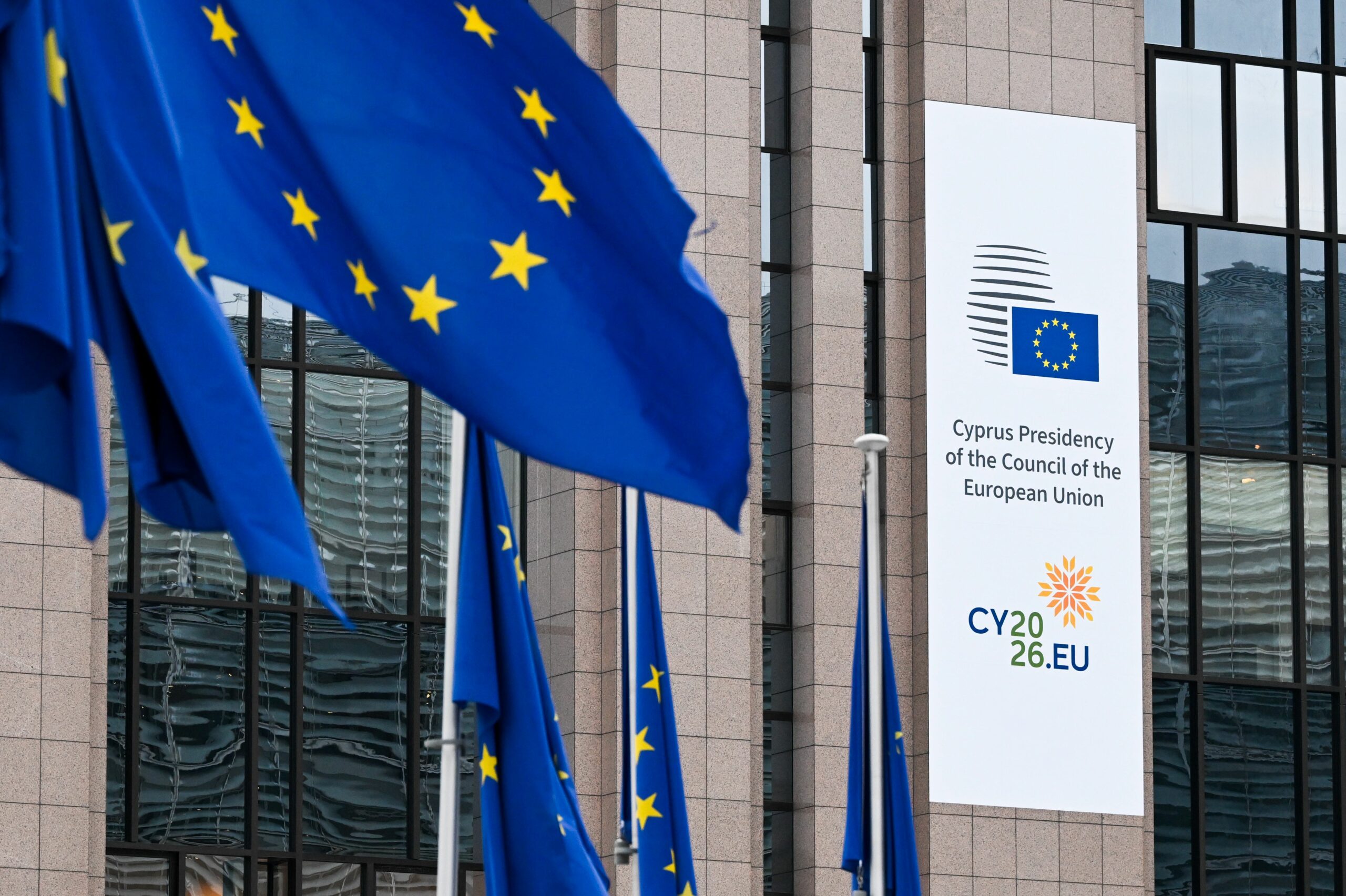
The Cyprus Presidency of the Council of the European Union began in January and will run until the end of June 2026, marking Cyprus’s return to the role 14 years after its first Presidency in 2012. During this six-month mandate, the Cypriot Presidency is placing strong emphasis on strengthening the EU’s autonomy in its cooperation with external partners, as well as on its capacity to act independently, structured around five overarching priorities. This Presidency follows a term under Denmark that brought plant-based foods and sustainable food systems higher onto the EU policy agenda through several high-level discussions, raising expectations as to whether Cyprus will build on this momentum in the coming months.
Competitiveness priority
Under its competitiveness priority, the Cyprus Presidency aims to support Europe’s shift towards sustainable, low-carbon, and resource-efficient production while strengthening overall competitiveness, and has highlighted its intention to promote a “balanced” approach to reinforcing agricultural and food systems, ensuring fair conditions and a stable supply. These goals could be the gateway to discuss protein diversification, including an EU Action Plan for Plant-Based Foods, as recommended by the Strategic Dialogue on the Future of EU Agriculture and the Danish Presidency. Ultimately, food security in the EU is mostly hindered by a lack of production and consumption of plant-based proteins, leading to less efficient resource and land use.
Fight against marginalisation and poverty
The Cyprus Presidency is also planning to address inclusion and the fight against different forms of marginalisation and poverty. Under the priority “A Union of Values That Leaves No One Behind” the Presidency will support the implementation of the forthcoming Anti-Poverty Strategy and advance initiatives that ensure an unobstructed supply of safe, high-quality food for all. Achieving access to affordable and healthy food for all citizens requires addressing the current imbalance in EU fiscal, funding, and support policies. An overarching review of measures that directly and indirectly affect food prices, with the aim of making more sustainable and healthier options more affordable and accessible, would therefore be a key opportunity. This could include a more equitable fiscal policy that harmonises low or zero VAT for plant-based and several changes to existing EU policies. In this context, rebalancing support towards whole plant foods such as pulses, legumes, and vegetables through the Common Agricultural Policy and country-specific CAP National Plans, as well as supporting the plant-based foods through EU funding programmes could play a central role in improving food affordability and access, particularly for low-income households. Public procurement is another powerful tool, given that government spending on food and catering services accounts for a significant proportion of EU expenditure. Shifting public procurement towards plant-based foods would enable access to higher-quality food, including organic, seasonal and local products. This approach is particularly relevant in public settings, such as schools, where the EU School Scheme could strengthen the role of plant-based foods in contributing to social inclusion, public health, and the transition to more sustainable food systems. Changes could also address the Promotion Policy, re-focusing these instruments to further promote food intake that currently does not reach dietary guidelines recommendations.
Security priorities do not include food security
The Presidency’s security priorities do not explicitly address food security, although this should be seen as a crucial sector in this sphere. Efficient resource use when feeding our population must be addressed, which could include further support for production and consumption of plant-based foods. Shifting diets away from resource-intensive products frees up food, land, and water, making food systems more sustainable, resilient, and capable of feeding a growing population while reducing environmental impact. While plant-based diets offer benefits such as improved nutrition and lower emissions, ensuring access, affordability and nutritional adequacy through whole, locally grown foods remains key for equitable food security.
Trade policy
In its priorities, the Cypriot Presidency also highlights the promotion of an open, robust, and sustainable EU trade policy and the expansion of the EU’s network of trade agreements. In order to ensure sustainable food systems, as fairness towards EU farmers, such trade agreements should include strong reciprocity clauses, ensuring that imported products meet production, safety, and regulatory standards.
Programme of the AGRIFISH Council under the Cypriot Presidency
The Agriculture and Fisheries Council (AGRIFISH) under the Cyprus Presidency have three main goals: promoting a fair, competitive, and sustainable primary production sector; advancing negotiations on the post-2027 Common Agricultural Policy (CAP); and providing guidance for a reinforced Common Fisheries Policy (CFP).
Common Agricultural Policy
The Cyprus Presidency plans to facilitate political discussions on the proposed CAP package for 2028–2034, including the CAP sectoral proposal and aims at general CAP simplification. There are significant opportunities to increase support for plant-based production within the next CAP, such as sectoral support for the protein sector, more coupled income support for legume production, investment and diversification support for farmers, as well as environmental schemes involving leguminous crops.
The Presidency will advance discussions on the Common Market Organisations (CMO) proposals (both the targeted review proposal already in trilogues and the full review proposal) which are particularly relevant for the plant-based sector. The full CMO revision proposal published by the Commission sought to prohibit plant-based food producers from using 29 terms, including words such as “bacon” and “steak,” across the EU. Besides denominations, the new CMO will also include a revision of the School Scheme that presents significant opportunities for the inclusion of plant-based foods.
On the targeted CMO revision, although approved with even stronger restrictions from the Parliament side, there were no restrictions on the Commission or Council positions. The trilogue negotiations between the European Parliament, the European Commission, and the Council in December 2025 did not result in an agreement. As a result, negotiations are expected to resume now under the Cypriots. It is to be seen if the Council will keep its initial general approach or develop a new position on the topic.
Protection of farmers
The Cypriot Presidency underlines the need to protect European farmers from market imbalances through targeted measures that safeguard competitiveness and ensure a fairer agri-food supply chain, including follow-up on the evaluation of the Unfair Trading Practices Directive. It also aims to promote fair value distribution, strengthen farmers’ resilience and negotiating power, and support innovation and generational renewal. These objectives can be achieved by supporting the growth of the plant-based food sector. The transition to plant-based production could provide new income streams and make farmers less vulnerable to price fluctuations and external challenges. It could also encourage generational renewal by attracting new entrants to agriculture through modern and sustainable production models.
Key events of the Cypriot Presidency
Key events to follow include the AGRIFISH Council meetings on 26 January, 23 February, 30 March, 27 April, 26 May, and 22 June; the Organic Farming Ambassador Meeting on 18-20 March; the CAP Directors Meeting on 28-30 April; and the Informal Meeting of Agriculture Ministers on 3-5 May. All events are listed in the Presidency’s calendar.