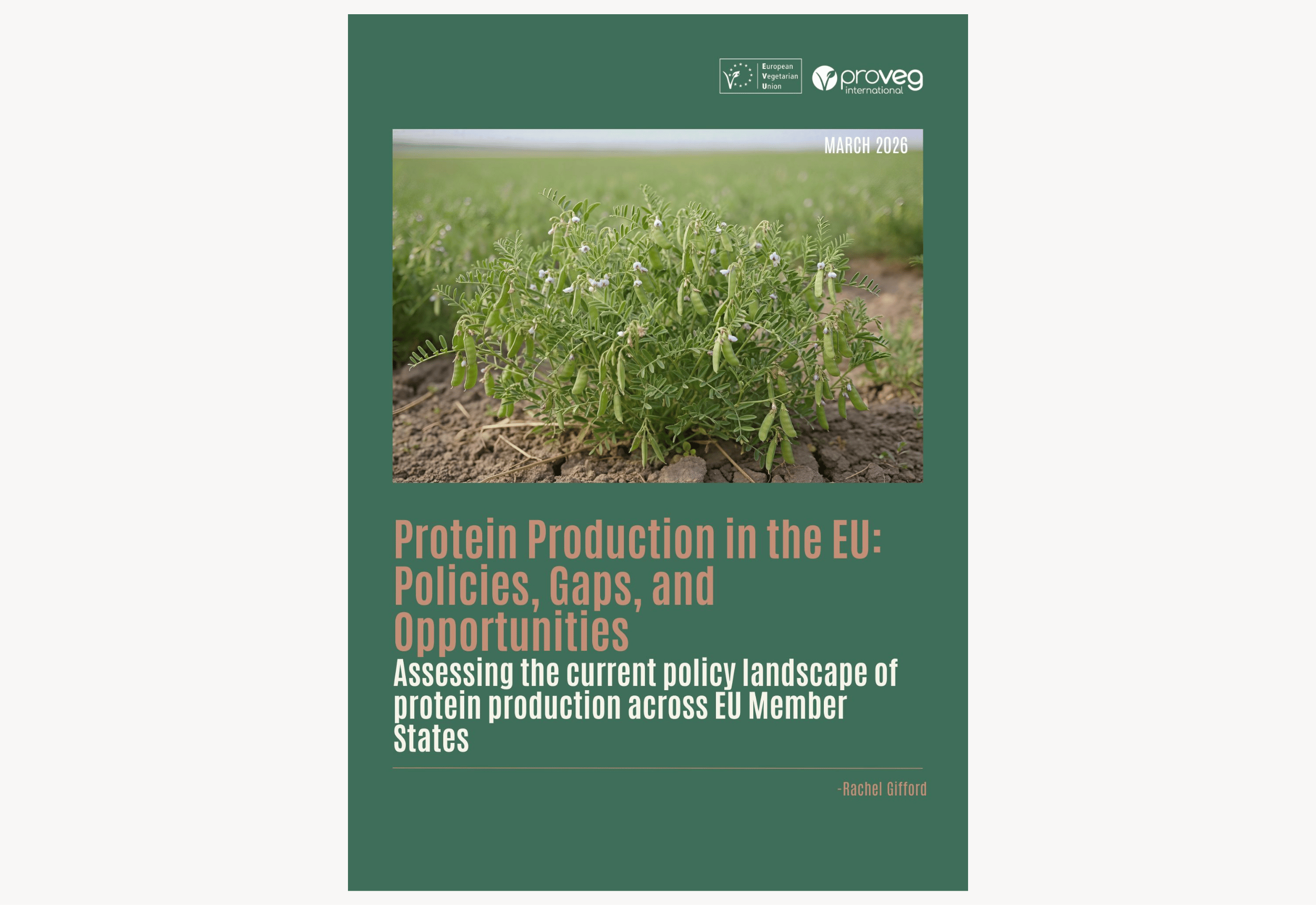
Protein diversification offers a promising way forward for strengthening Europe’s strategic autonomy, reducing climate-harming emissions, providing sustainable pathways for farmers and increasing competitiveness. However, progress is slow, and the current policy approach does not offer the necessary support to encourage diversification on a broader scale. With this in mind, the report ‘Protein Production in the EU: Policies, Gaps and Opportunities’, identifies where the current gaps and opportunities lie in increasing protein crop production, and which policy levers could be utilised at EU level to support further diversification.
As the urgency to adapt our food systems grows, protein diversification becomes an increasingly important lever for meaningful food system change. Leguminous crops offer environmental benefits, support soil health, and provide new market opportunities for farmers, providing a planet friendly source of protein. Yet, despite increasing political attention to sustainability and resilience, CAP financing remains structurally misaligned with food security, dietary guidance and climate objectives. A disproportionate share of support continues to flow toward emission-intensive animal farming systems.
‘Protein Production in the EU: Policies, Gaps and Opportunities’ synthesises insights from CAP Strategic Plans and National Protein Strategies across selected Member States to examine how existing approaches support or constrain the diversification of protein crops in the EU, informing the development of an EU Protein Strategy and Action Plan. It distinguishes explicitly between protein crops used for animal consumption (feed) and human consumption (food) and evaluates how current policy frameworks can contribute to diversification efforts.
The central finding of the report by Rachel Gifford highlights that the agronomic potential for protein diversification in the EU is not the main constraint, but rather structural, economic and policy barriers. Incremental support through existing instruments will not deliver results at scale. Therefore, new policy instruments within the EU framework must be established to differentiate between objectives for feed and food proteins, introduce a visible, protein-specific framework within the CAP, reduce the risk of farmer diversification by providing targeted income and transition support, prioritise the development of downstream infrastructure and value chains, and align supply-side incentives with demand-side instruments, including public procurement and dietary policy.
Action at EU level could be taken by implementing the long-awaited Protein Strategy. This would provide policy consistency, strengthen internal coherence and signal that the transition to plant-based protein is a long-term structural priority for the resilience of the Union. Furthermore, such a strategy would reduce the uncertainty currently faced by farmers when considering how and if to diversify their crops. Action at EU level is a key to align Member State initiatives and create a level playing field across the EU food system.
Make sure you read the full report, published by the European Vegetarian Union and ProVeg International.