NEW REPORT · 10 NOVEMBER 2026
A level playing field
12 of the 27 EU Member States tax at least one plant-based food more heavily than its animal-based counterpart. Our new report compares the VAT on 33 products in all 27 Member States, from plant-based drinks and cheese to tofu and pulses.
Download the full report
12 of 27
Member States tax at least one plant-based food more than its animal-based equivalent
Up to 21%
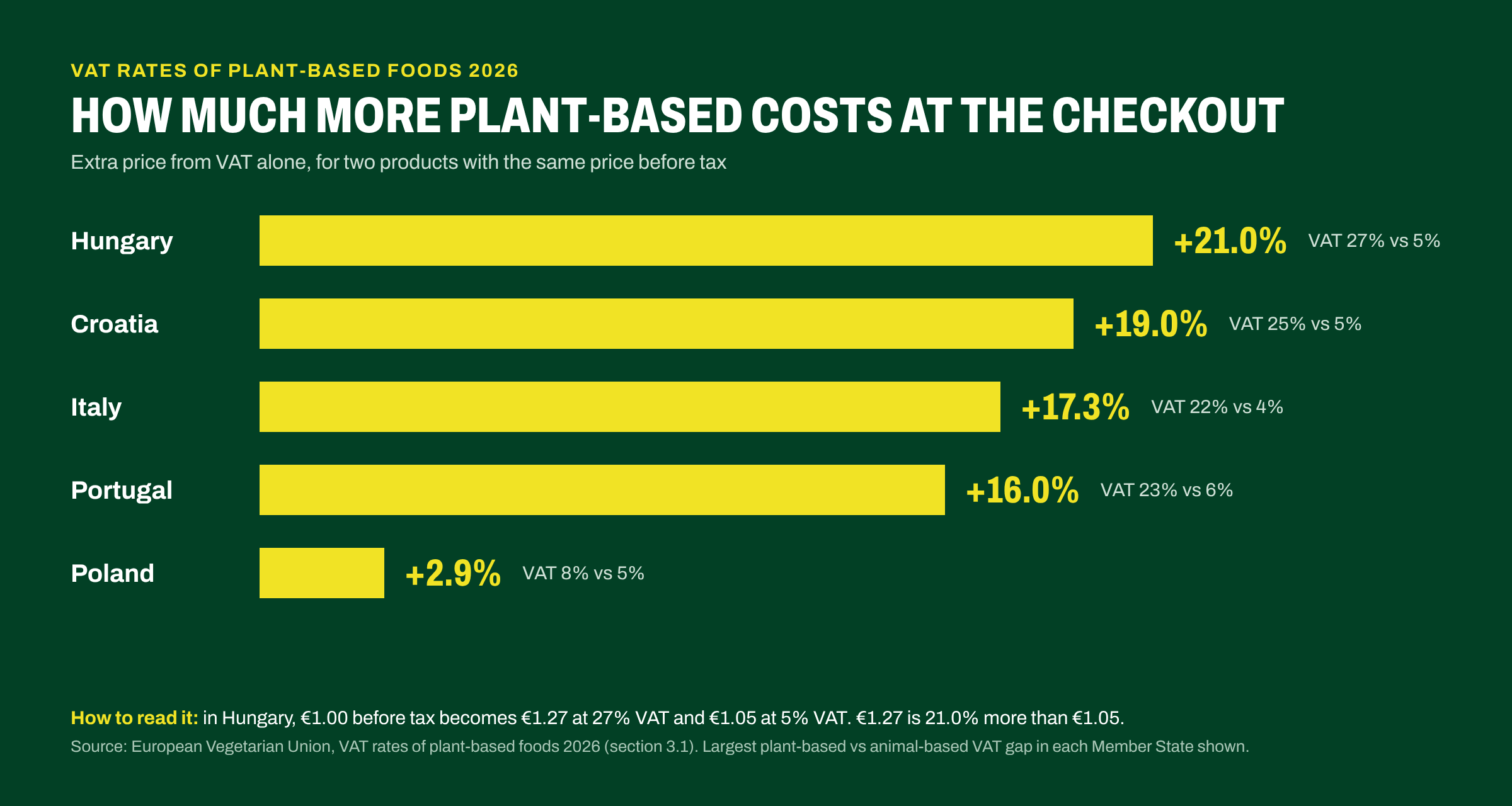
higher checkout price for the plant-based option from VAT alone (Hungary)
8
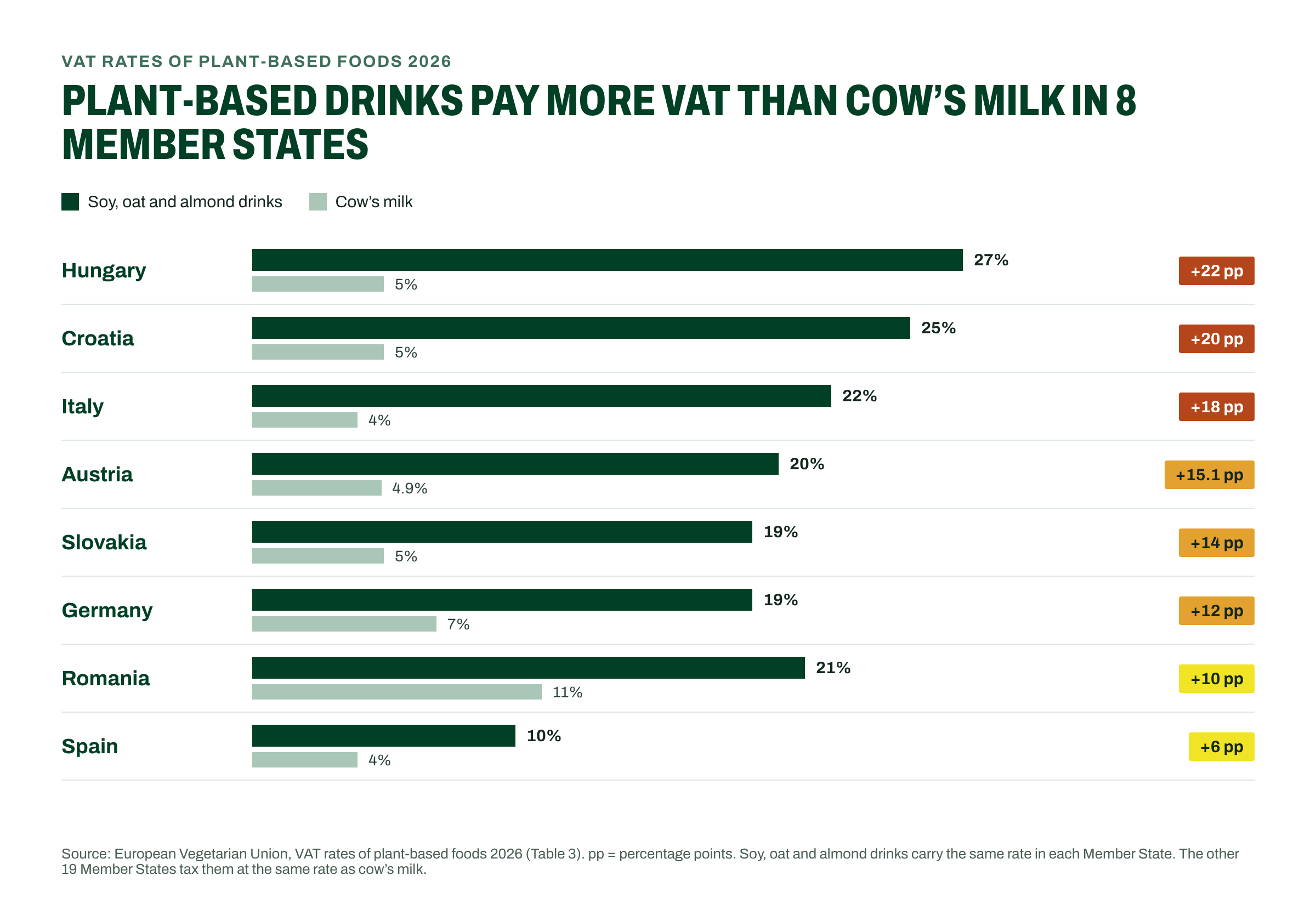
Member States tax plant-based drinks above cow’s milk
25
different VAT rates apply to the 33 products surveyed across the EU
Fifteen Member States apply a single VAT rate to all the foods surveyed, so plant-based and animal-based products are taxed the same by design. The other twelve sort foods into different VAT brackets, with Hungary, Croatia, Italy and Portugal showing the largest differences. No Member State taxes the plant-based product lower in any of the 15 product pairs compared.
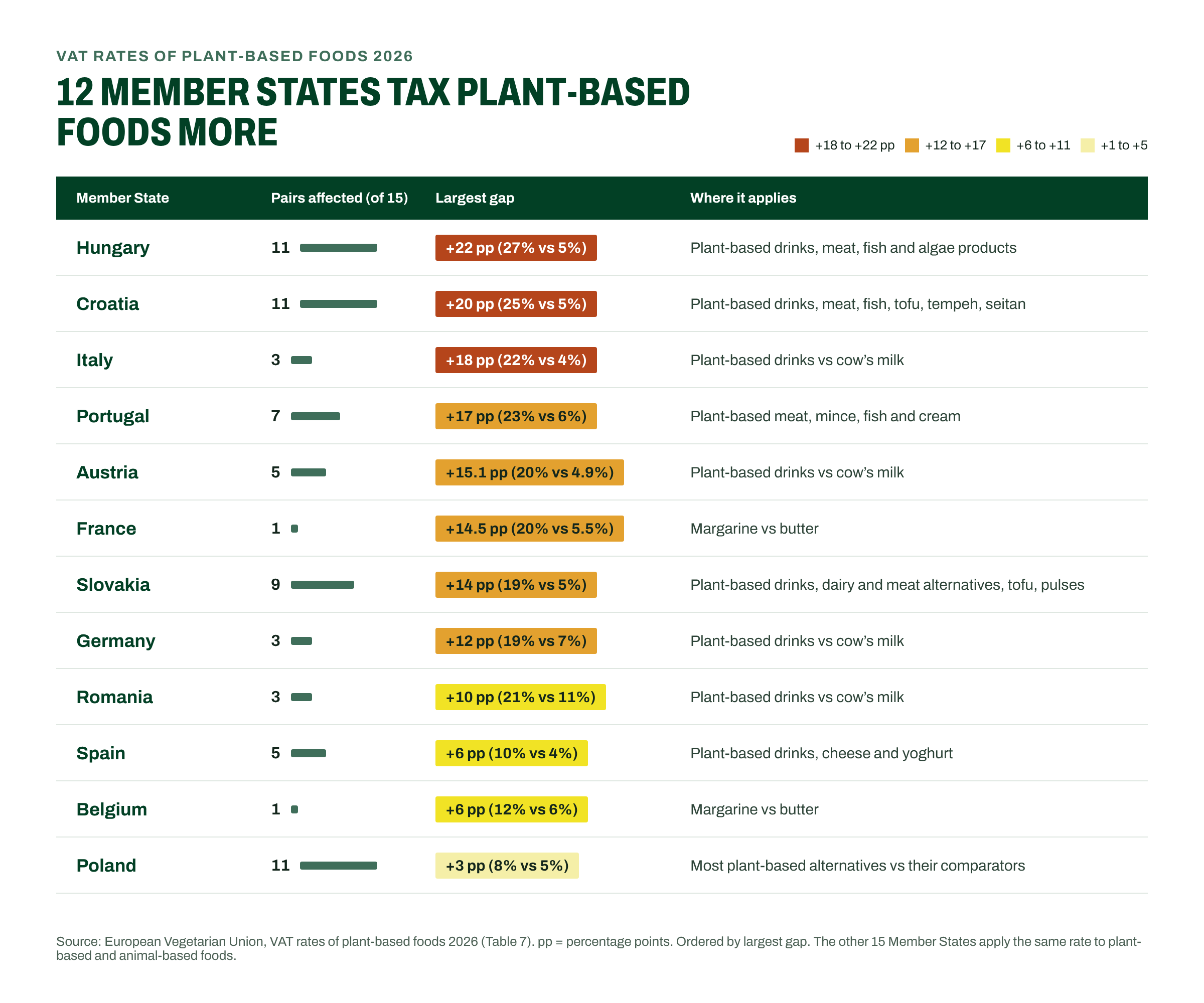
Soy, oat and almond drinks are taxed above cow’s milk in eight Member States. In Italy they pay 22% VAT against 4% for cow’s milk. Even neighbours differ: the same oat drink is taxed at 6% in Belgium, 9% in the Netherlands and 19% in Germany.
For two products with the same price before tax, VAT alone makes the plant-based option up to 21% more expensive. In Hungary, €1.00 before tax becomes €1.27 for a plant-based drink and €1.05 for cow’s milk.
Prices shape what people buy, and lower-income households are the most price-sensitive. Retailers that introduced price parity between plant-based and animal-based products reported sales increases of 30% or more.
The EU Protein Plan aims to grow more plant protein in Europe. Higher VAT on plant-based foods weakens the demand that gives farmers a market for pulses and other protein crops.
The Draghi and Letta reports (2024) identify diverging national tax treatment as an obstacle to the internal market. The same product is a milk substitute in one Member State and a beverage in the next.
Equal treatment is already possible: since the 2022 reform of the VAT Directive, Member States may apply reduced or zero rates to foodstuffs. Belgium, Czechia and Portugal have already aligned the rate on plant-based drinks with cow’s milk, and Spain applies a 4% super-reduced rate to dry pulses.
ABOUT THE DATA
VAT rates were collected by EVU member organisations and partners between March and August 2026. The report compares statutory retail VAT rates, not shelf prices, and excludes temporary measures. It covers 15 direct product pairs and six traditional plant proteins compared with fresh meat.